A Historic Moment in Strasbourg
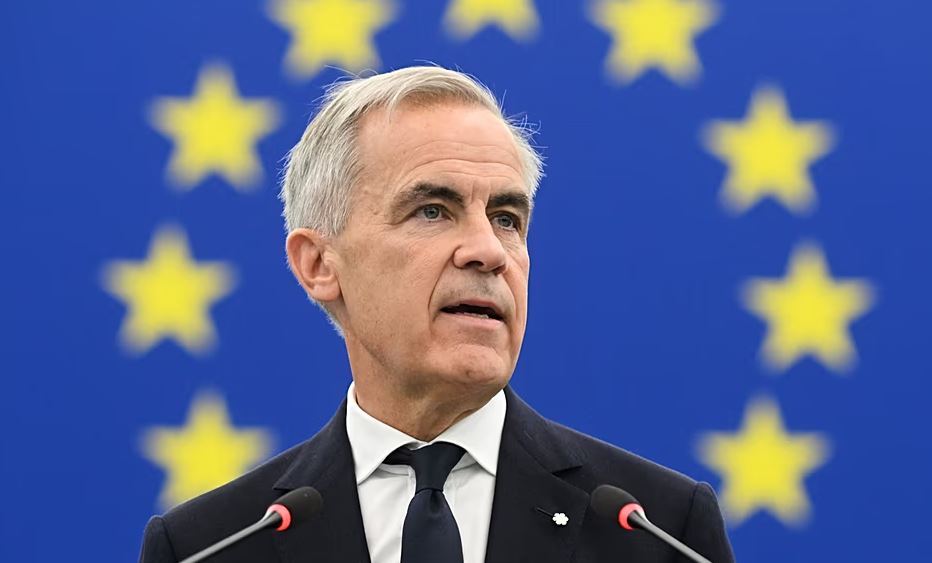
On September 16, 2026, European Commission President Ursula von der Leyen used her State of the Union address to propose a ground-breaking idea: Canada could become the European Union’s first-ever “associate member.” The announcement, directed at Canadian Prime Minister Mark Carney—who was present in Strasbourg—was met with a standing ovation from the European Parliament, signaling strong political backing for the initiative.
The reaction was not universal, however: while the European Parliament applauded the move as a bold step toward strategic autonomy, US President Donald Trump condemned it as a “hostile act” and threatened new tariffs on European goods. Meanwhile, some Canadian conservatives, including Pierre Poilievre, expressed concerns about potential loss of sovereignty and economic risks. Despite the mixed reactions, the proposal marks a pivotal moment in transatlantic relations and the EU’s push for greater independence on the global stage.
A Geopolitical Pivot Amid Global Turmoil
The world is in the midst of a geopolitical realignment. The US-China trade war, Russia’s ongoing aggression in Ukraine, and rising protectionism have forced nations to rethink their alliances. The EU’s invitation to Canada is a clear message: Europe is seeking to diversify its partnerships and reduce dependence on both the US and China.
Von der Leyen framed the proposal as a way to strengthen ties with a like-minded democracy that shares the EU’s commitment to climate action, human rights, and rule-of-law-based governance. As she stated:
“Europe wants to take its relationship with Canada to the highest level possible. Together, we can build an alliance that is a beacon for democracies around the world.”
Critical Minerals and Defense: The New Frontiers
One of the most tangible areas of cooperation highlighted in the proposal is critical minerals—a sector where China currently holds a near-monopoly. Canada is rich in lithium, cobalt, and rare earth elements, which are essential for electric vehicles, renewable energy, and defense technologies. By partnering with Canada, the EU can secure its supply chains and reduce vulnerability to Chinese economic coercion.
This aligns with the EU’s broader Green Deal and defense industrial strategy, which aim to boost local production of key technologies. The EU has already imposed tariffs on Chinese EVs and is investing billions in European-made solar panels and batteries. Canada’s mineral wealth could accelerate this transition and help the EU achieve its climate and security goals.
Carney emphasized the importance of this collaboration in his address to the European Parliament:
“We can strengthen our strategic autonomy through deep cooperation in the full range of strategic capabilities, including critical minerals.”
Beyond minerals, the proposal also includes closer defence ties, such as joint military exercises, cybersecurity cooperation, and space technology. This aligns with the EU’s €100 billion defence fund, announced earlier this year, to boost local production of drones, ammunition, and other strategic equipment.
A Direct Challenge to US Hegemony
The announcement did not go unnoticed in Washington. Donald Trump’s administration slammed the proposal as a “hostile act” and threatened new tariffs on European goods. The reaction underscores the growing tensions between the US and its traditional allies, as Europe seeks to assert its own strategic autonomy.
Carney was quick to reassure the US that Canada is “not seeking to become a full member of the EU” and that the partnership would not undermine its relationship with Washington. Instead, he framed it as a way to make Canada a “more effective partner” with the US. However, the symbolism of the EU deal is clear: Europe and Canada are preparing for a world where the US may no longer be the sole guarantor of stability.
The Trump administration’s aggressive response suggests that the US sees this as a threat to its influence. If the Canada-EU deal moves forward, it could encourage other US allies (e.g., Australia, New Zealand) to seek similar arrangements with the EU, further eroding US dominance in global affairs.
Why This Matters for European Sovereignty
The Canada-EU associate membership proposal is more than just a bilateral agreement—it’s a test case for a new era of global cooperation. For Europe, this deal represents a strategic opportunity to address several pressing challenges:
- The EU is actively de-risking from both Chinese supply chains and US tech dominance. Canada’s critical minerals and defense capabilities make it a valuable partner in this effort, helping the EU secure its industrial base and reduce external dependencies.
- With China controlling much of the EV and solar supply chains, the EU needs alternative sources to meet its Green Deal targets. Canada’s lithium and cobalt reserves could be a game-changer, enabling the EU to accelerate its green transition while reducing reliance on Chinese imports.
- The EU has long sought to reduce its reliance on US tech giants (e.g., Google, Meta). A closer partnership with Canada could boost collaboration on AI, quantum computing, and cybersecurity, helping the EU build its own tech ecosystem and assert digital sovereignty.
Finally, if successful, the Canada-EU deal could serve as a blueprint for other democratic, like-minded nations to align with the EU, creating a network of strategic partners that counterbalance US and Chinese influence. Maybe Australia, New-Zealand or a come back from the UK under a new framework…
Final Thoughts: A New Chapter for the EU
The State of the Union address and the Canada-EU associate membership proposal mark a turning point in the EU’s quest for sovereignty and strategic autonomy. While the details are still being worked out, the symbolism is clear: the EU is no longer content to be a junior partner in a US-led world order. Instead, it is forging its own path, building new alliances, and securing its future in an increasingly multipolar world.
As Mark Carney told the European Parliament:
“We are not fair-weather allies. We do not pursue zero-sum deals. We hold common values for which we have always fought, and in whose defence we must always remain vigilant.”
The road ahead will be complex and contentious, but one thing is certain: the EU’s bold gambit with Canada has set the stage for a new era in global geopolitics.