Looking for a toothbrush made in Europe — or a European alternative to Oral-B, Sonicare and Colgate? Toothbrushes are one of the most contested product categories in the bathroom cabinet. The electric segment is dominated by two giants — Oral-B, owned by America’s Procter & Gamble, and Philips Sonicare — while the manual segment is flooded with cheap disposables from US conglomerates such as Colgate-Palmolive, often made in Asia and designed to be thrown away every three months. In between, a group of European manufacturers defends its ground with a different promise: gentler cleaning, genuinely sustainable materials, repairable hardware and, in several cases, genuine European manufacturing.
If you care about where your toothbrush is made, who owns the company behind it and what happens to it after three months, this guide is for you. It is the companion piece to our earlier article on The Fascinating Origin of Toothpaste and Top 10 Brands from Europe — once you have sorted out your toothpaste, it is time to sort out the brush that delivers it.
A quick note before we start. Truly European-made toothbrushes are rarer than community discussions suggest. Even brands that are widely recommended as “European made” often produce their brushes or brush heads in Asia, and several European brands sell electric brushes that are designed in Europe but assembled in China. Always check the country of origin on the packaging of the specific product before you buy.
1. Y-Brush (France) – The French Deep-Tech Reinvention
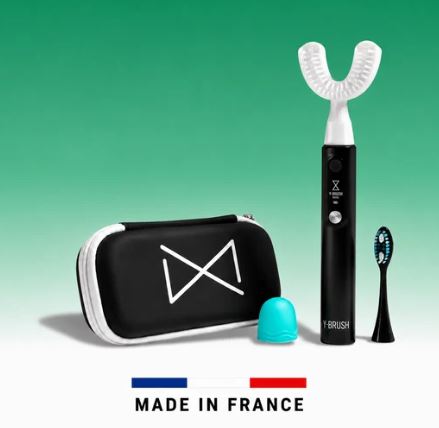
Fully European ★★★★★ 100/100Y-Brush is a French startup from Lyon that emerged from local deeptech incubators with a genuinely new idea: a Y-shaped sonic brush that cleans all your teeth simultaneously in about 20 seconds using nylon-infused bristles. It is one of the boldest pieces of dental-hardware engineering to come out of Europe in years and holds nothing back against the US incumbents on innovation.
Development, R&D and clinical testing are French and manufacturing is is also from France.
2. TePe (Sweden) – The Swedish Oral Care Specialist
Fully European ★★★★★ 100/100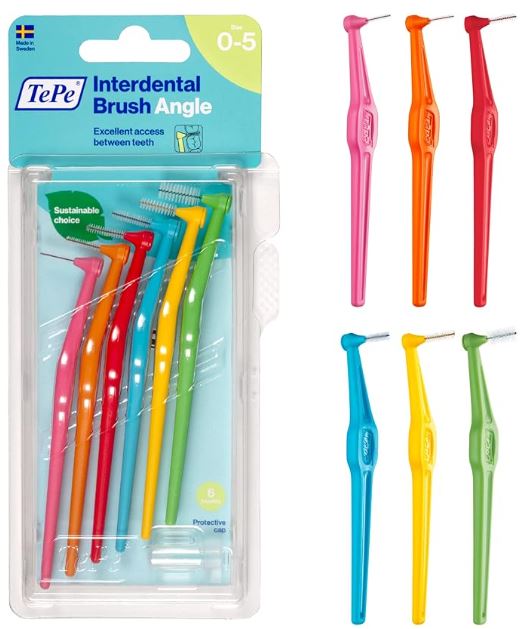
TePe is a Swedish company founded in Malmö in 1965 and remains one of the few oral care brands of its size still fully owned and developed in Sweden. It is best known for its interdental brushes — the angled TePe interdental brushes are consistently named the best in class by European dental hygienists — but its manual toothbrush range, made with a recycled-plastic handle, is equally strong.
TePe manufactures the bulk of its range at its own factory in Malmö, which places it among the strongest performers on manufacturing origin in this category. Its sustainability programme is unusually concrete: bio-based plastics, take-back schemes for used brushes and renewable energy in production.
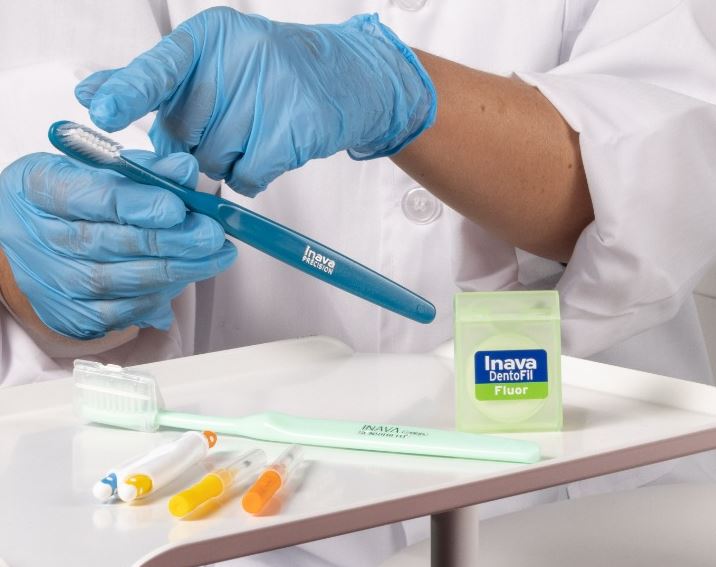
3. Inava (France) – French Pharmacy Heritage, Made in France
Fully European ★★★★★ 100/100Inava is the oral care brand of Pierre Fabre, the French pharmaceutical group based in Castres, and a fixture of French parapharmacies for decades. Its range runs from the everyday manual brushes to the extra-soft surgical-grade brushes used and recommended by French dental professionals, and the brushes are manufactured by Pierre Fabre’s oral care division in France.
That combination — French ownership, French manufacturing and a pharmaceutical parent company with European quality controls — places Inava among the strongest European performers in the category, and its pharmacy distribution means spare brushes and replacement models are easy to find almost everywhere in Europe.
4. CleanOS (Italy) – The Milan Startup 3D-Printing Your Brush
Fully European ★★★★★ 100/100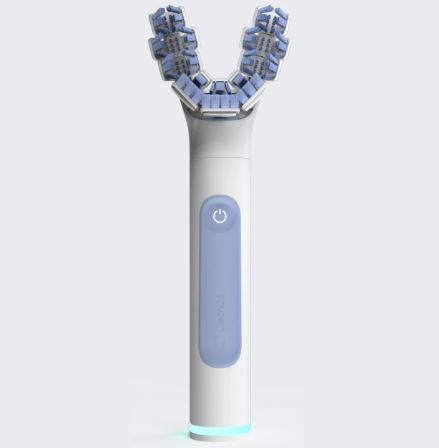
CleanOS is a Milan-based startup founded in 2024 by three childhood friends — CEO Giovanni Tuccari, CMO Pietro Pastore (a trained dentist) and CTO Francesco Anzalone (a robotics engineer) — whose Smartbrush is billed as the first electric toothbrush personalised from a 3D intraoral scan of the user’s mouth, cleaning a full arch in under 30 seconds. The company has gone through Techstars, raised roughly €1.8 million and is one of the few teams attempting consumer hardware in Italy, moving to a subscription model that covers head refills, re-personalisation and toothpaste.
It is early-stage and unproven at scale, but it is the most radical rethink of the toothbrush currently happening in Europe.
The Smartbrush is 90% made in Italy, 10% in Portugal. We originally planned to manufacture in China, but between geopolitical uncertainty and the reality that we’re plastic-heavy rather than electronics-heavy, our components come from proprietary moulds, Italian and European suppliers turned out to be genuinely competitive on unit cost, especially since a lot of Italian SMEs have been starved of new projects for the last 10–15 years.
– Giovanni Tuccari, CEO of CleanOS to Startup Reporter
5. Happybrush (Germany) – Munich Sonic With an Eco Focus
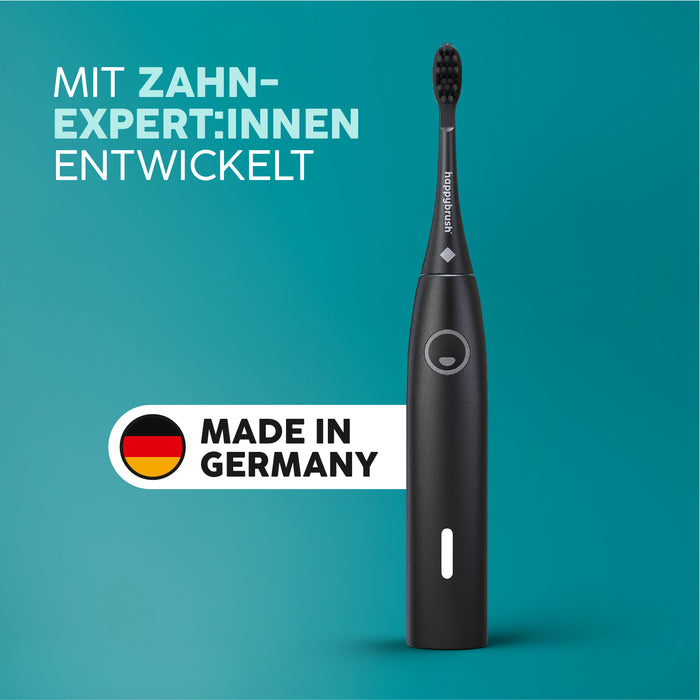
Strongly European ★★★★☆ 80/100Happybrush is a German company based in Munich that set out to build a European answer to the Oral-B/Sonicare duopoly. Its sonic toothbrush combines a full cleaning action with a subscription for replacement heads at prices well below the US giants’ recurring head costs, and the company puts a strong emphasis on eco-friendly packaging and reduced plastic in its heads.
It looks like a good portion of Happybrush’s electric brushes are manufactured in Germany although the company does not make a formal “made in Germany” claim for its full range, so check the country of origin on the specific product.
6. M+C Schiffer (Germany) – The Fourth-Generation German Manufacturer
Strongly European ★★★★☆ 80/100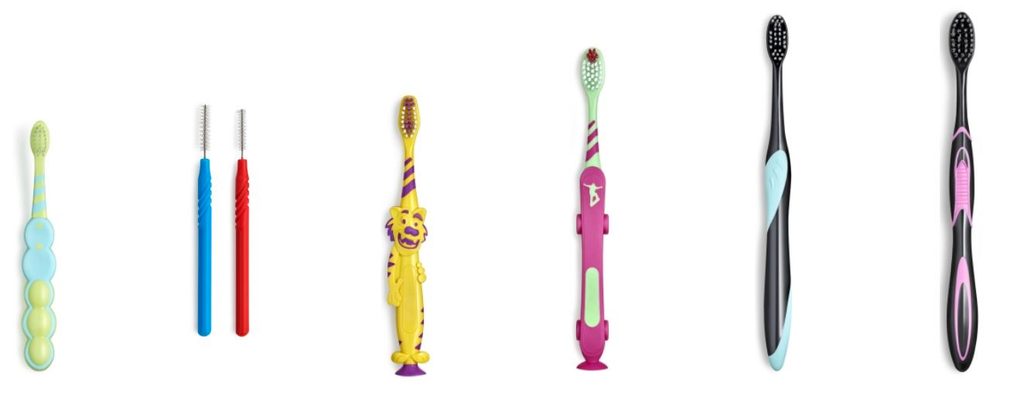
M+C Schiffer is a family company in its fourth generation, founded in 1887 by Johann W. Schiffer and today one of the world’s leading toothbrush manufacturers. Its headquarters in Neustadt/Wied, near Cologne, is the group’s research, development and quality centre, and its most ambitious products are manufactured there on automated production lines.
The brand also has a second German plant, Denta Bross in Stützengrün in Saxony’s Erzgebirge which offers genuine “Made in Germany” quality. Yet the brand also manufactures some of its products in India through a joint venture.
The catch for consumers: Schiffer works mainly as a partner and system supplier to trade and industry, so its brushes often reach shops under other brands’ names — meaning European-made brushes are more common on drugstore shelves than the labels suggest.
7. Curaprox (Switzerland) – The Dentist’s Favourite, Made in Switzerland
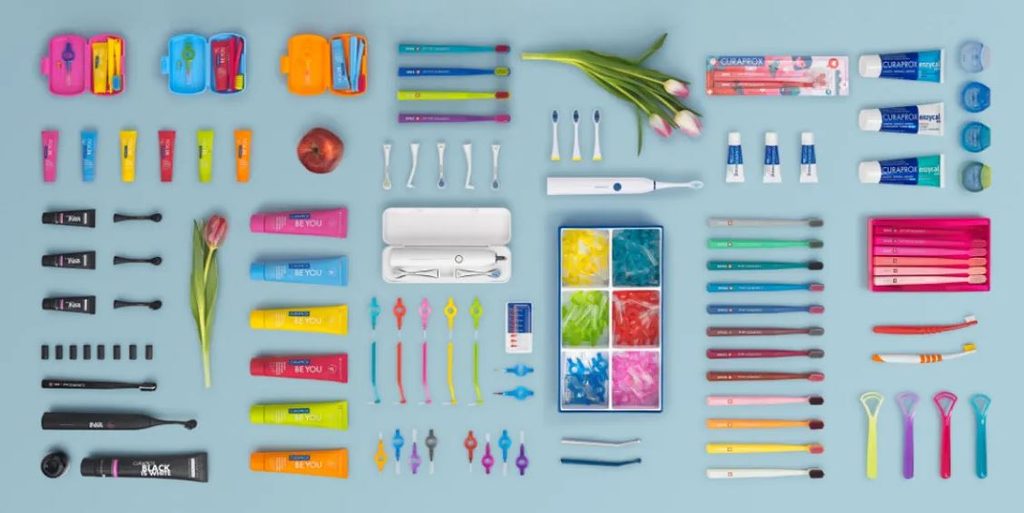
Moderately European ★★★☆☆ 70/100Curaprox is a family-owned Swiss company based in Kriens, near Lucerne, and it is the brand most frequently recommended by European dentists. Its manual brushes, above all the cult CS 5460 with 5,460 ultra-soft Curen filaments, are genuinely manufactured in Switzerland, which makes them one of the very few toothbrushes on the market you can buy with European production guaranteed.
Curaprox is the natural European alternative to US drugstore brands such as Colgate’s toothbrushes: comparable or lower prices, materially better bristle technology and Swiss manufacturing.
8. Jordan (Norway) – Nordic Household Name With a Century of History
Moderately European ★★★☆☆ 61/100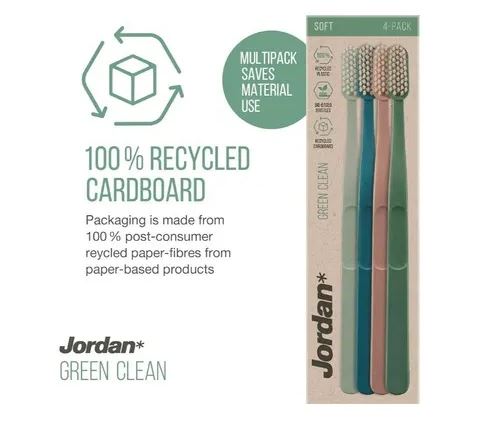
Jordan is Norway’s oldest brush manufacturer and one of the Nordics’ most recognised oral care brands. It was established in Oslo in 1837 by the Danish immigrant Wilhelm Jordan as W. Jordan Børste & Penselfabrik, originally a comb maker, before expanding into brushes and taking up toothbrush manufacturing in 1927.
Since 2012 it has been part of the Norwegian Orkla group, which keeps ownership firmly Nordic. Its manual range includes the popular Jordan Target Sensitive brushes and an increasingly broad recycled-plastic line, and — a detail that matters for switchers — many of its brush heads fit Oral-B electric handles, making it one of the easiest brands to move to from a US-owned electric brush.
Jordan made its brushes in Oslo until 1969, when a new factory opened at Flisa in south-eastern Norway; the Oslo factory closed in 2000 and toothbrush production moved to England in 2002, while Flisa still makes toothpicks and cleaning equipment. Today it seems that the toothbrushes themselves are produced mainly in Asia.
9. Spotlight Oral Care (Ireland) – Dentist-Founded Irish Brand
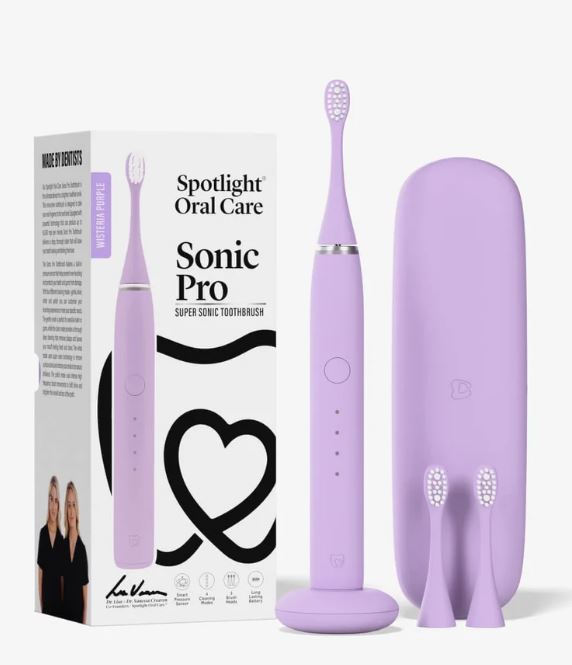
Moderately European ★★★☆☆ 60/100Spotlight Oral Care was founded by two Irish dentists, Lisa and Vanessa Creaven, and has grown from a professional whitening paste into a full oral care range, including a sonic electric toothbrush with a sustainable bamboo-implemented head system. Its formulations are vegan and cruelty-free, and the brand is one of the few European oral care companies with a genuinely clinical pedigree behind it.
The electric brush is manufactured in Asia, so the European score rests on Irish ownership, formulation expertise and design. Spotlight is a solid European alternative to US whitening and electric-brush bundles sold by the big drugstore brands.
10. Smyle (Netherlands) – Dutch Sonic Brushes With Bamboo Heads
Moderately European ★★★☆☆ 60/100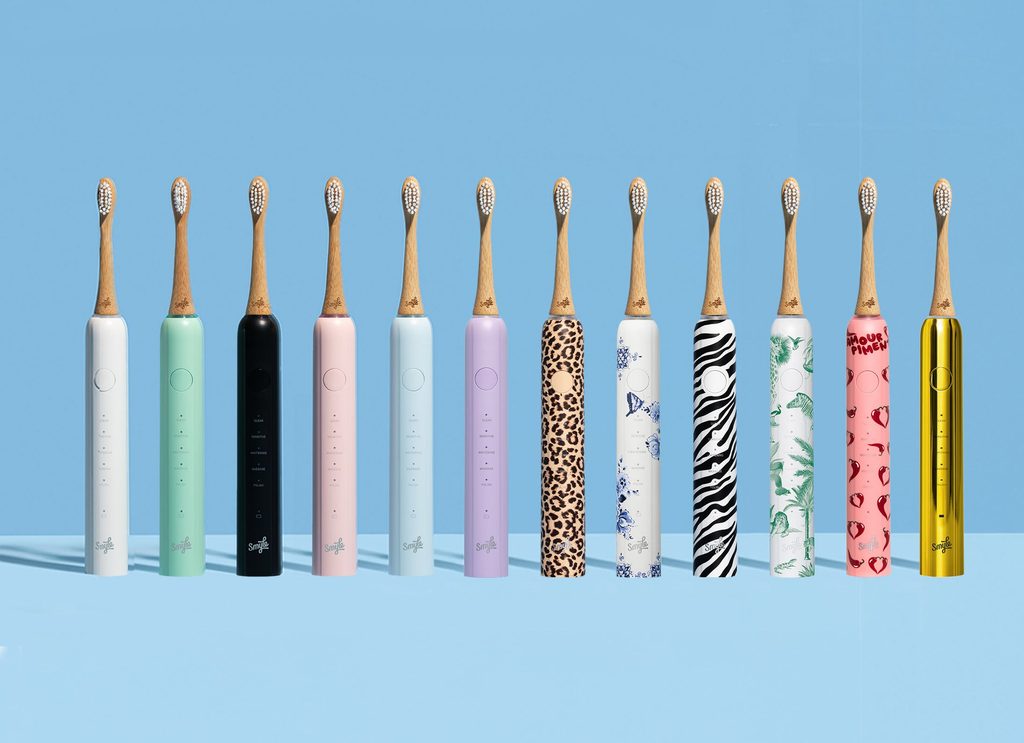
Smyle is a Dutch company from Amsterdam that has built one of the most complete sustainable oral care ranges in Europe: a sonic electric toothbrush whose heads are made of bamboo, plastic-free toothpaste tablets, and refill subscriptions designed to strip unnecessary packaging out of the bathroom. Its brush regularly wins sustainability awards in the Netherlands and is one of the most-recommended European sonic brushes in buying communities.
The sonic brush itself is manufactured in China, as with almost every electric brush in this list, so Smyle’s score rests on Dutch ownership, design and its genuinely circular refill system rather than on manufacturing origin.
11. Bambaw (Belgium) – Zero-Waste Bamboo Brushes From Brussels
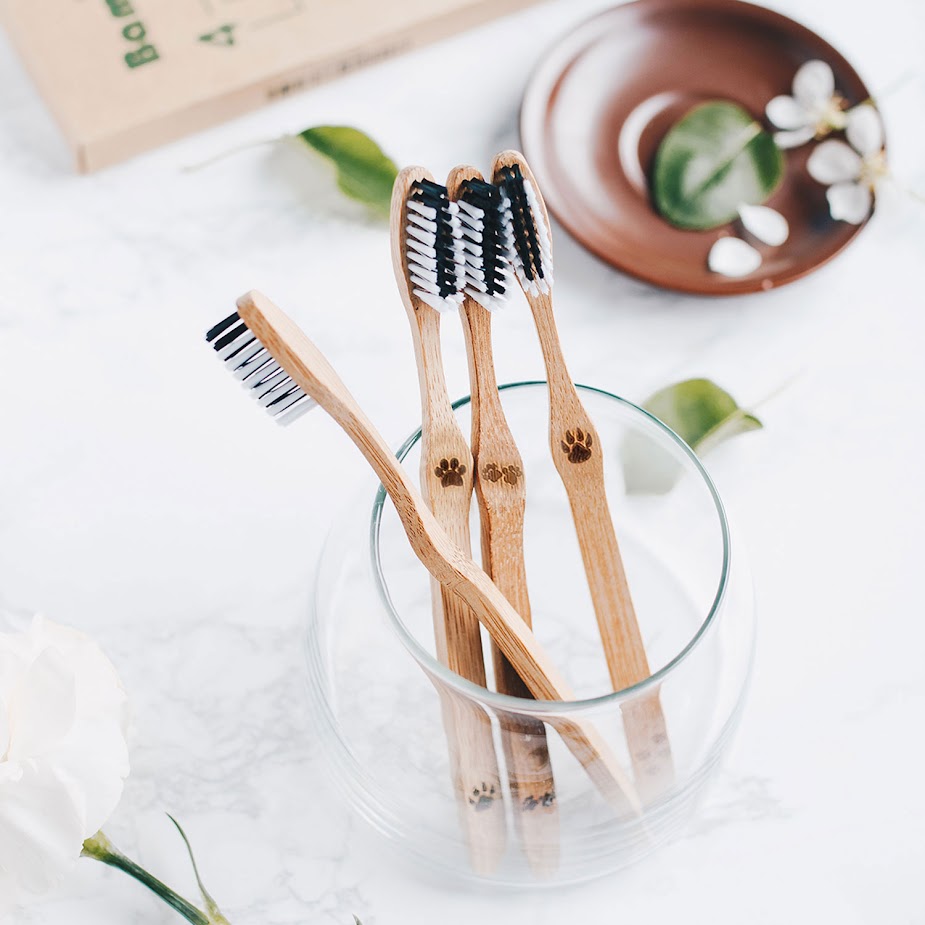
Moderately European ★★★☆☆ 60/100Bambaw is a Belgian company from Brussels, part of the Bambaw Group, that built its name on plastic-free swaps for everyday items — safety razors first, and bamboo toothbrushes among its core products ever since. Its bamboo toothbrushes come in soft, medium and hard bristles, with an ergonomic, curved handle designed for a proper grip, and they are sold individually or in multipacks as a direct replacement for plastic drugstore brushes.
The company ships carbon-neutrally, packages plastic-free and publishes user and recycling guides for each product, which reflects a genuinely European zero-waste ethos.
Buyers should be aware, as sustainability platforms have noted, that the bamboo handles are manufactured in China, so Bambaw scores strongly on ownership, design and mission rather than on manufacturing origin.
12. Philips (Netherlands) – Dutch Sonic Heritage in the Mainstream
Moderately European ★★★☆☆ 60/100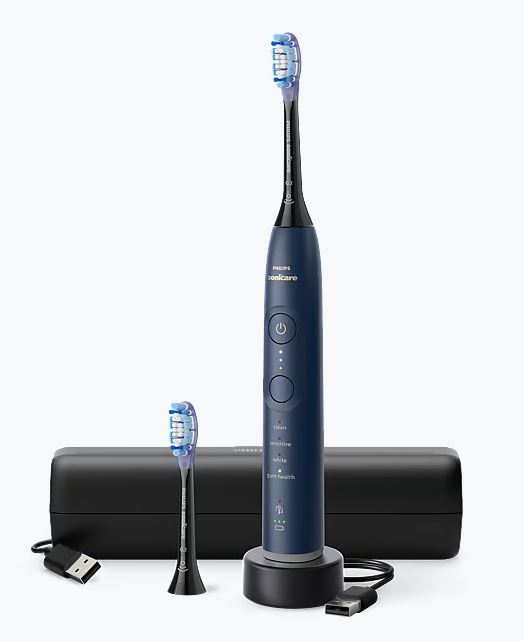
Philips Sonicare is the brand that gives Oral-B its only serious global competition, and unlike its US rival it is not American at all: the Sonicare line is developed by Versuni, the Dutch company based in Amsterdam that took over Philips’ domestic appliances business and carries decades of Dutch sonic technology forward. It is the mainstream choice for buyers who want a widely available, dentist-recognised electric brush without handing their money to Procter & Gamble.
The honest caveats are the same that apply to the whole electric segment: much of the Sonicare range is manufactured in China, and Versuni’s ownership is no longer purely European. Still, Sonicare brushes are repairable through European service channels in a way Oral-B’s sealed iO series is not, and its models are assembled for the European market partly in the Netherlands.
Conclusion
The European toothbrush market is stronger on manual brushes than on electric ones, and buyers should be clear-eyed about both. Curaprox, TePe and Inava prove that genuinely European-made brushes exist — Swiss, Swedish and French respectively — while Happybrush, CleanOS and Y-Brush show that European companies can compete with the US giants in the electric segment. Bambaw, Smyle and Jordan cover the plastic-free and everyday ends of the market. In the manual category, European manufacturing is a realistic expectation; in the electric category it is rarer, and the honest advice is to check the country of origin on the packaging of the exact product you intend to buy.
Buying any of these instead of an Oral-B, a Colgate or another US-brand brush means supporting European companies, keeping your spending under European consumer-protection and warranty rules, and choosing brushes designed around repairability or compostability rather than planned replacement.