
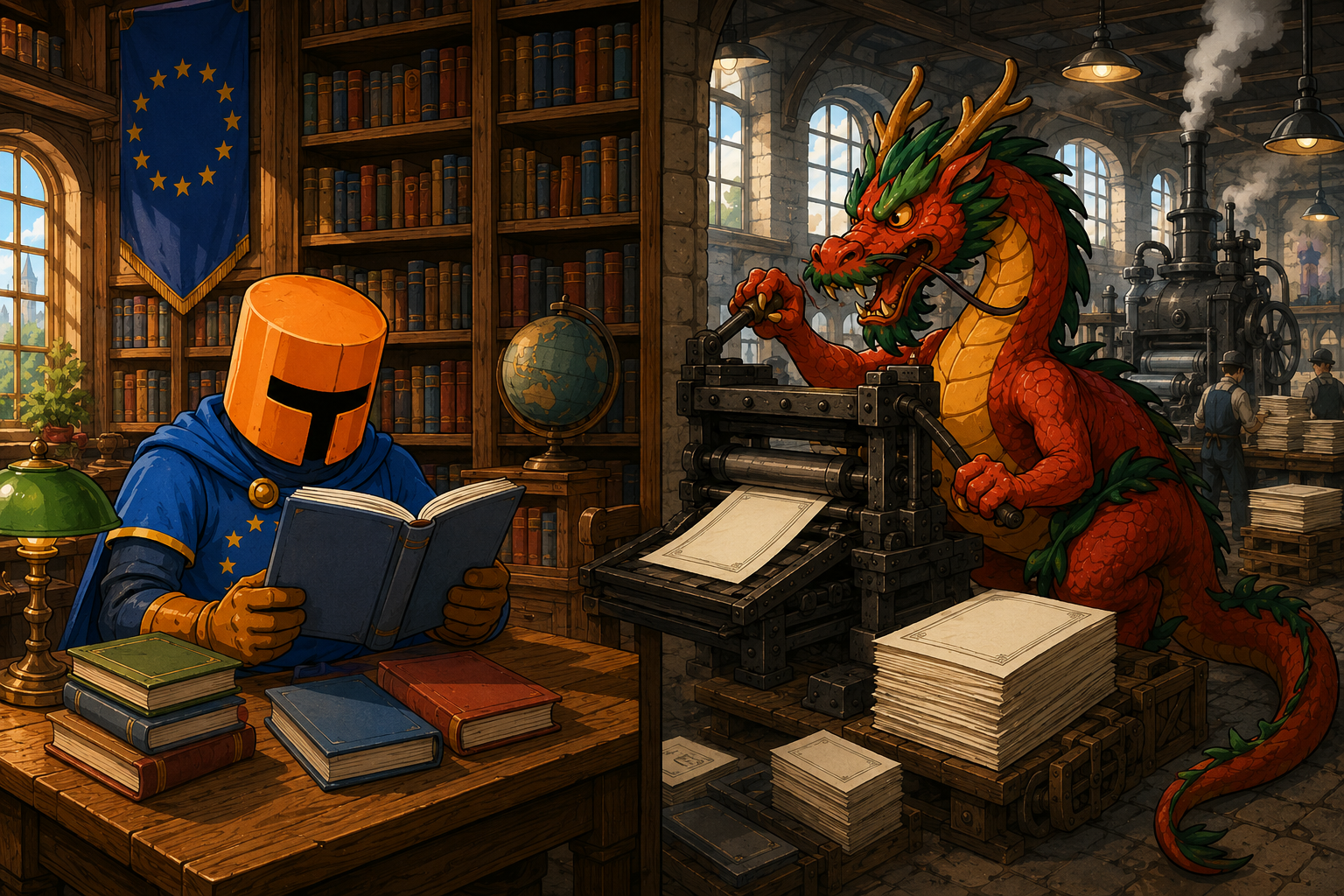
Introduction: The Global Shift in Book Printing
In the past few decades, the global publishing industry has undergone a quiet but profound transformation. Driven by the promise of lower costs, higher profit margins, and scalable production, an increasing number of European publishers have outsourced their printing needs to China. Today, it is estimated that over 90% of board books and a significant portion of other book types are printed in China, a trend that has reshaped the economics of publishing but also introduced a host of ethical, political, and creative dilemmas.
While the financial incentives are clear as China’s printing industry offers unmatched efficiency and cost-effectiveness, the reliance on Chinese printers has come with a hidden cost: censorship. As Chinese authorities tighten their grip on content, European publishers are finding themselves caught between economic pragmatism and the principles of free expression.
The Censorship Problem: How Chinese Printing Impacts European Books
1. The Mechanism of Censorship
China’s publishing and printing industry operates under strict government oversight. The General Administration of Press and Publication (GAPP) and other regulatory bodies require that all content printed in China must comply with Chinese censorship laws. This means that books intended for European readers may be subject to review, and any material deemed sensitive (such as references to Taiwan, Tibet, Tiananmen Square, or human rights abuses) must be removed or altered before printing can proceed.
Examples of Censorship in Action:
- In 2026, Victoria & Albert Museum (UK) – Iconic London-Based Cultural Institution faced controversy when it was revealed that its exhibition catalogues were censored by a Chinese printer. References to sensitive topics were omitted to comply with local laws, sparking outrage among artists and free speech advocates.
- Global Illustrated Book Publisher and Octopus Publishing (UK) (leading Non-Fiction and Illustrated Book Publishers) were reported to have removed references to Taiwan from their books to avoid issues with Chinese printers. A spokesperson for Quarto confirmed that suppliers in China had refused to print the original text due to legal restrictions.
- Publishers from Australia and New Zealand have also reported delays and cancellations when printing in China, as local printers refuse to handle content that violates censorship rules.

2. Self-Censorship: A Growing Trend
Faced with the choice between altering content or losing access to affordable printing, many publishers are pre-emptively self-censoring their works. This means:
- Avoiding topics that might trigger Chinese scrutiny.
- Removing or rewording passages that could be interpreted as critical of the Chinese government.
- Accepting that certain books (particularly those with political, religious, or historical themes) cannot be printed in China at all. This choice seems the most ethical.
The result is a chilling effect on global publishing, where the fear of offending Chinese authorities shapes what authors write and what readers can access.
Why Do Publishers Still Print in China?
Despite the ethical concerns, the economic advantages of printing in China remain compelling:
- Cost Efficiency: Chinese printers offer significantly lower production costs due to economies of scale, cheaper labour, and government subsidies. For large print runs, the savings can be substantial (sometimes 30-50% less than printing in Europe or North America).
- Quality and Capacity: China’s printing industry is highly advanced, with state-of-the-art facilities capable of handling massive orders with speed and precision. Many publishers, including Penguin Random House (Global), HarperCollins (Global), and Hachette (France), have long-standing relationships with Chinese printers.
- Global Supply Chains: The infrastructure for shipping books from China to Europe and beyond is well-established, making it a logistically convenient option.
The Pushback: European Publishers Resisting the Trend
While many publishers have embraced Chinese printing, a growing number are reconsidering their options out of principle, logistical necessity, or in response to consumer demand. However, finding specific publishing houses that openly disclose their printing supply chains is challenging. Most publishers do not publicly detail where their books are printed, leaving consumers in the dark about the origins of their purchases.
French Publishers and the “Livre Made in France” Movement
A growing movement in France advocates for local printing to preserve jobs, reduce environmental impact, and avoid censorship. Éditions du Seuil and Gallimard have increasingly shifted production to French printers for certain titles, particularly those with sensitive content.
École des Loisirs, one of France’s most respected children’s book publishers also prioritizes French printers for many of its titles, particularly those aimed at younger readers, to maintain quality and avoid censorship.
Why Transparency Matters
Environmental Impact: Many readers are increasingly conscious of the carbon footprint of their purchases. Printing locally in Europe can significantly reduce emissions compared to shipping books from China, but without clear labelling, consumers cannot factor this into their decisions.
Consumer Choice: Readers who value free expression, sustainability, or local industry should have the ability to choose books based on where and how they are printed. Currently, this information is not easily accessible before purchase.
Ethical Concerns: Without transparency, consumers cannot know whether a book has been censored or altered to comply with Chinese regulations. This lack of information undermines the principle of informed consent in publishing.
Call to Action: What Can Readers and Publishers Do?
For readers, supporting publishers and books that are printed locally or ethically is key. Look for “Printed in [Country]” labels on copyright pages, and advocate for greater transparency from publishers about their printing practices.
For publishers, consider diversifying printing locations, investing in local or European printers, and being transparent about where and how books are produced. This could include publicly disclosing printing locations and explaining the reasoning behind these choices.
For authors, advocate for contracts that specify censorship-free printing and work with publishers who share your values. Encourage your publishers to prioritize transparency in their supply chains.