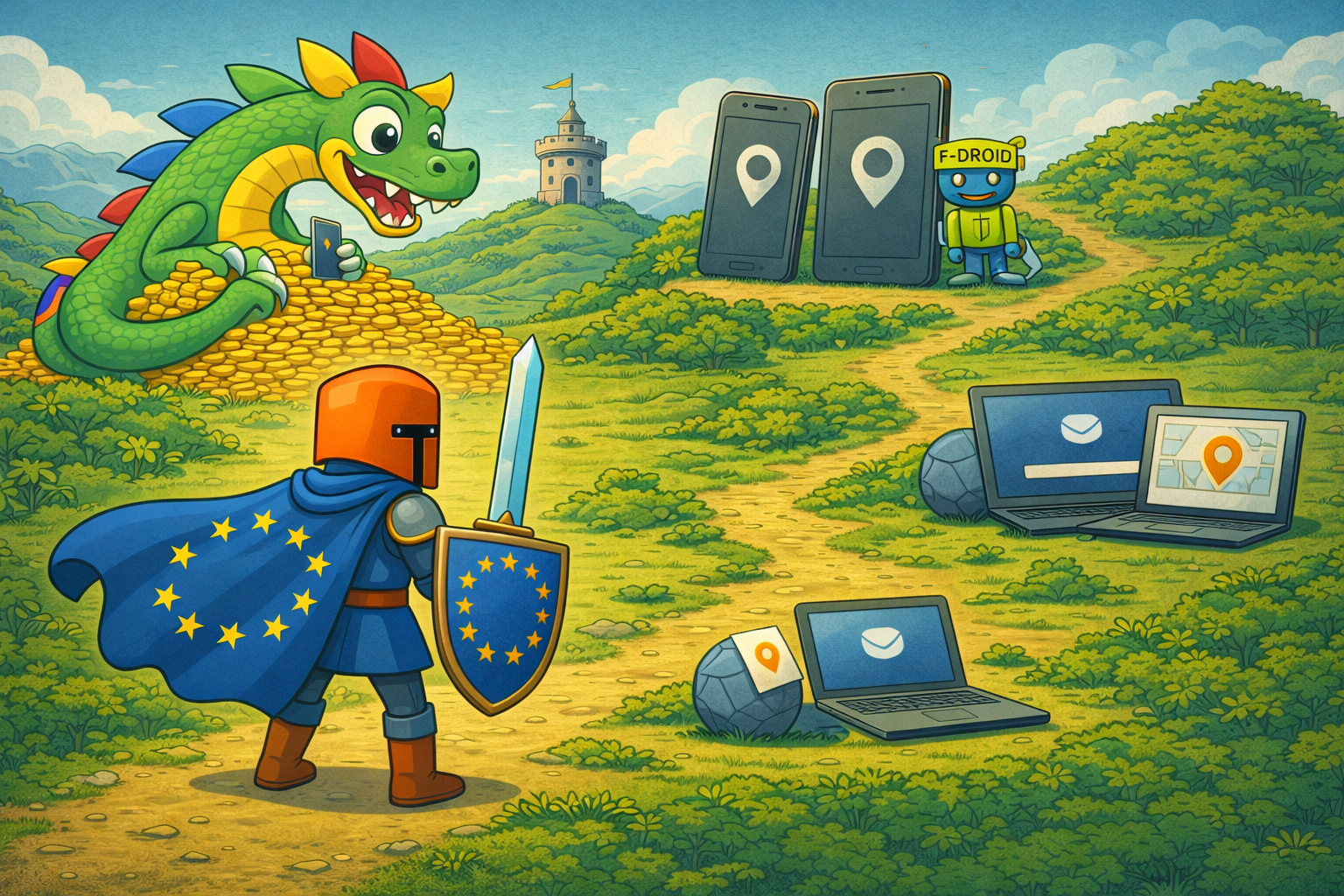
Every tap, search, and click on your Google-powered devices feeds into a system designed to track, analyse, and profit from your personal data. The cost of convenience is your data sovereignty or the right to control who accesses your information and how it’s used. The good news? You don’t have to accept this trade-off. By replacing Google’s most invasive products with privacy-respecting alternatives, especially those developed in Europe where GDPR protects your rights, you can take back control of your digital life. Here’s how to do it in five strategic steps.
Step 1: Liberate Your Phone from Google’s Grip
Your phone is the epicenter of Google’s data collection. Android devices come pre-loaded with Google services that track your location, app usage, and even your keystrokes. To break free, start by reducing Google’s presence on your device.
You can also replace the Google Play Store with F-Droid, an open-source app store filled with privacy-focused apps. For apps only available on the Play Store, Aurora Store lets you download them anonymously, without a Google account. By taking these steps, your phone becomes a tool for your convenience and not Google’s surveillance.
Step 2: Break Free from Google’s Browser and Search Engine
Google Chrome and its default search engine are designed to monitor your browsing habits, building a detailed profile of your interests, purchases, and even your political leanings. To reclaim your privacy, start by switching to a browser that respects your data.
Firefox, with its strong privacy settings, or Brave, which blocks ads and trackers by default, are excellent choices. For even greater protection, LibreWolf (a hardened version of Firefox) blocks all telemetry and tracking. If you prefer a European option, Vivaldi, developed in Norway, offers built-in privacy tools and no ties to Google.
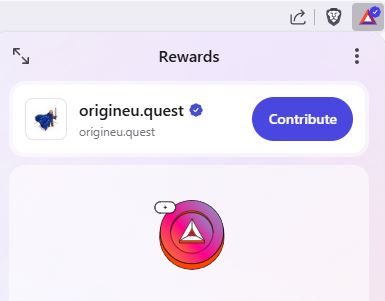
Brave also have a creator program for users to contribute to websites or social media accounts they like. You can do this for origineu.quest! You just need to open this page in the Brave Browser, click the BAT logo in the address bar, select ‘contribute’ and choose an amount.
Your next move is to change your default search engine. Startpage, based in the Netherlands, delivers Google’s search results without the tracking, while Qwant, a French search engine, is fully GDPR-compliant and doesn’t log your queries.
Step 3: Replace Google’s Most Invasive Apps
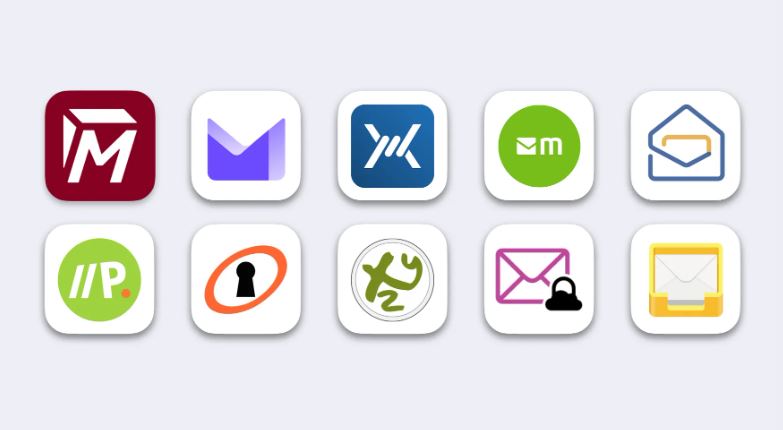
Google’s apps like Gmail and Google Maps are deeply embedded in daily life, but they’re also among the biggest privacy offenders. Replacing them is a critical step toward data sovereignty.
Next, let’s tackle navigation: Google Maps tracks your every move, but OpenStreetMap (OSM) provides a community-driven, open-source alternative. Apps like OsmAnd or Magic Earth (both European-developed) offer offline maps and privacy-focused navigation. For public transit, Citymapper (UK-based) or Transportr (open-source) are excellent choices. By switching, you stop feeding Google your location data while still getting where you need to go.
Step 4: Remove Google from Your Hardware and Home Ecosystem
Google’s reach extends beyond software and into hardware products like Chromebooks and Google Nest devices, are designed to integrate seamlessly into its tracking ecosystem. To fully reclaim your data sovereignty, you’ll need to replace these devices with privacy-respecting alternatives.
If you’re using a Chromebook, consider switching to a laptop with Linux pre-installed, such as those from Tuxedo Computers (Germany) orSlimbook (Spain). See other European laptop alternatives on our dedicated article. These devices give you full control over your operating system and data.
For smart home devices, Google Nest is a privacy nightmare. Instead, use Home Assistant, a Dutch open-source platform that runs locally on your network, keeping your data out of the cloud.
Step 5: Break Free from Google’s AI: Gemini and Privacy-Focused Alternatives
Google’s AI tools, like Gemini, are designed to integrate deeply into your digital life, analysing your data to provide personalized responses. While convenient, this comes at the cost of your privacy and data sovereignty. Gemini processes your queries, documents, and even creative work, building a profile that extends far beyond traditional search or email.
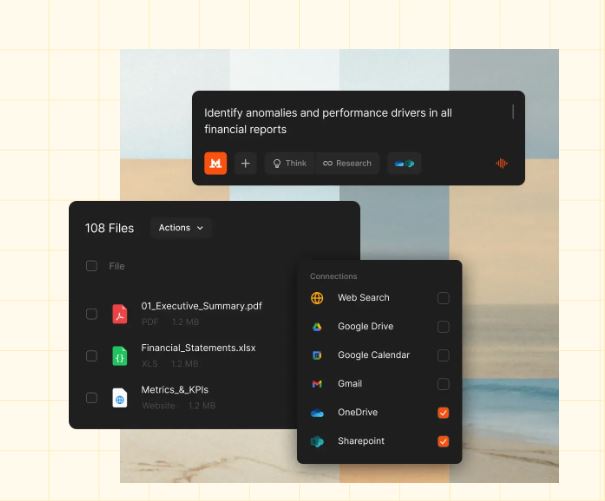
To reclaim control, consider switching to privacy-focused AI alternatives. European-based models, such as Le Chat from Mistral AI, prioritize user privacy and data protection, aligning with GDPR standards. Mistral’s models are designed to deliver powerful AI capabilities without compromising your personal data.
For those who need AI assistance but want to avoid Google’s ecosystem, self-hosted AI tools like Ollama let you run large language models locally. This way, your interactions remain private, and your data stays yours. By choosing these alternatives, you can leverage AI’s benefits while maintaining your data sovereignty and supporting a more open, privacy-respecting digital future.
Epilogue: Life After Google
Breaking free from Google won’t be seamless. Some apps may not work perfectly, and you might miss a few conveniences. But the trade-off for true data sovereignty is worth it. No more ads following you. No more algorithms deciding what you see. No more corporation knowing more about you than you know about yourself.
Your quest doesn’t end here. Privacy is an ongoing battle, and staying vigilant is key. Support European digital sovereignty initiatives, join communities like r/degoogle, and keep exploring privacy-respecting tools. You’ve taken the first steps toward a digital life that respects your rights and your freedom.
In an era where global supply chains blur the lines of national identity, understanding a brand’s true country of origin has become increasingly complex. Many consumers aim to support local
In recent years, there has been a growing trend towards supporting local businesses and seeking alternatives to global e-commerce giants like Amazon and eBay. Europe is home to a variety
Venturing into the world of online shopping can feel like entering a vast digital bazaar—one filled with mysteries, hidden truths, and the occasional trap. Among the most elusive treasures? Products
To provide the best experiences, we use technologies like cookies to store and/or access device information. Consenting to these technologies will allow us to process data such as browsing behavior or unique IDs on this site. Not consenting or withdrawing consent, may adversely affect certain features and functions.
Functional
Always active
The technical storage or access is strictly necessary for the legitimate purpose of enabling the use of a specific service explicitly requested by the subscriber or user, or for the sole purpose of carrying out the transmission of a communication over an electronic communications network.
Preferences
The technical storage or access is necessary for the legitimate purpose of storing preferences that are not requested by the subscriber or user.
Statistics
The technical storage or access that is used exclusively for statistical purposes.The technical storage or access that is used exclusively for anonymous statistical purposes. Without a subpoena, voluntary compliance on the part of your Internet Service Provider, or additional records from a third party, information stored or retrieved for this purpose alone cannot usually be used to identify you.
Marketing
The technical storage or access is required to create user profiles to send advertising, or to track the user on a website or across several websites for similar marketing purposes.